Product data sheets
Specifications and operating overview for each instrument in the line.
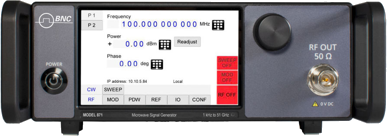
Model 871 Microwave Signal Generator
Flagship analog generator, 1 kHz to 51 GHz, 5 microsecond switching, multichannel front panel.
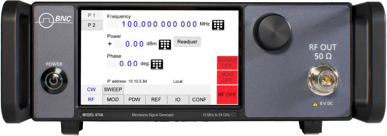
Model 870A Microwave Signal Generator
Widest coverage in the line, 10 MHz to 54 GHz, with a redesigned touchscreen platform.

Model 855B Multi-Output Signal Generator
High-power multi-channel platform, 300 kHz to 42 GHz, for multi-emitter and array test.
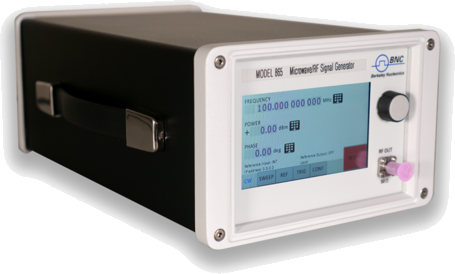
Model 865B Signal Generator
Low phase noise broadband source, 100 kHz to 40 GHz, for receiver and clock-reference test.
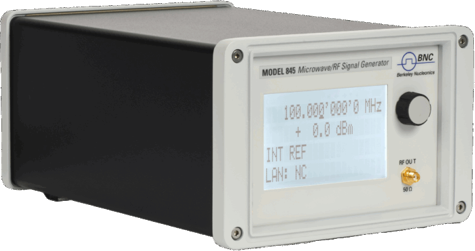
Model 845 Microwave Signal Generator
Compact mid-band analog generator, 100 kHz to 26.5 GHz, with flexible modulation options.
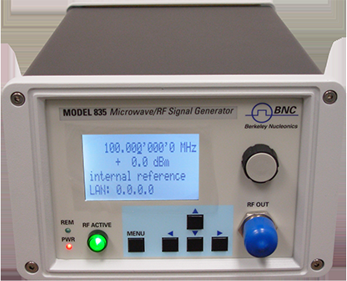
Model 835 RF Signal Generator
Entry-level RF generator, 9 kHz to 6 GHz, with a flexible options set for general bench work.
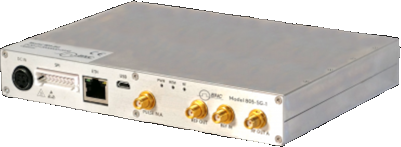
Model 805-SG Signal Source
Stable fixed microwave source to 20 GHz for reference and local-oscillator use.
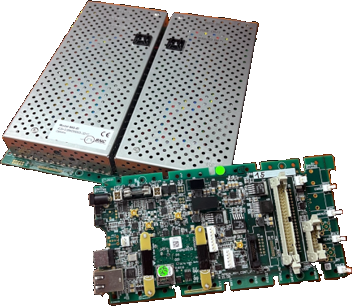
Model 845-OEM Embedded Signal Generator
OEM and shielded design, 100 kHz to 26.5 GHz, for building a source into an embedded system.
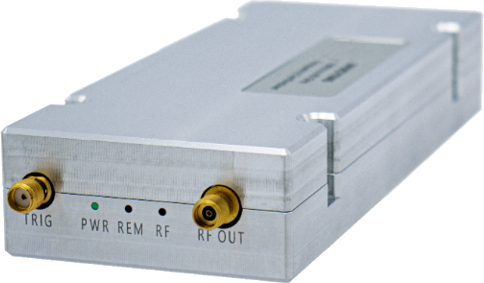
Model 866-M Frequency Synthesizer
Compact synthesizer, 1 MHz to 40 GHz, with an 85 microsecond switching option.
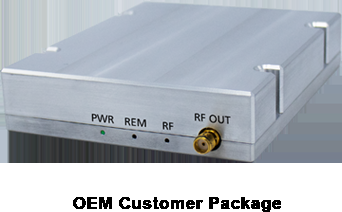
Model 805-M Frequency Synthesizer
Ultra-agile frequency synthesizer module, 100 kHz to 22 GHz, for fast tuning.
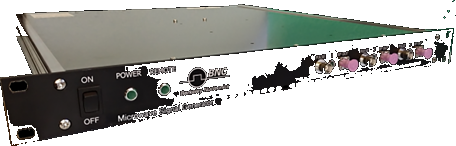
Model 825-M Multichannel Signal Source
Ultra-agile multichannel source, 8 kHz to 20 GHz, with switching as fast as 5 microseconds.
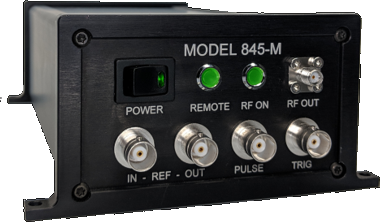
Model 845-M Low-Noise Synthesizer
Low-noise microwave synthesizer, 10 MHz to 20 GHz, in one or two channels.
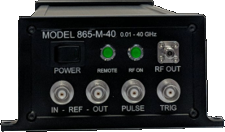
Model 865B-M Wideband Synthesizer
Wideband low-noise synthesizer module, 100 kHz to 40 GHz.
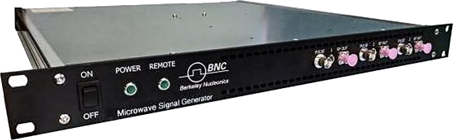
Model 865B-M-40-X Multi-Channel Synthesizer
Multi-channel low-noise wideband synthesizer, 100 kHz to 40 GHz, in one to four channels.
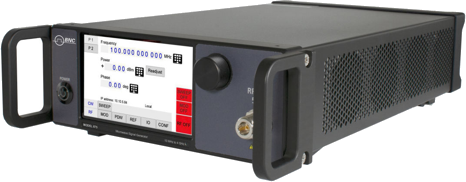
Model 875 Vector Signal Generator
Multichannel VSG, 10 MHz to 40 GHz, with I/Q vector modulation, pulse, and CW in one chassis.
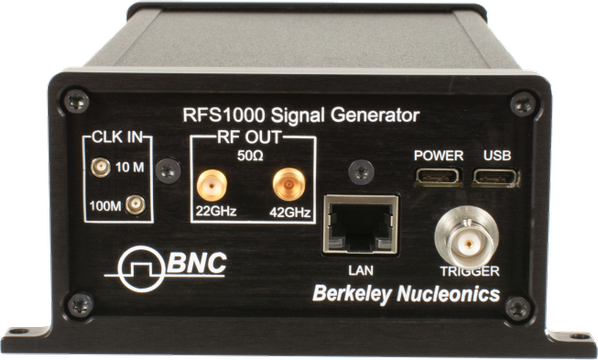
RFS-1000 Series RF Signal Source
CW and sweep source, 100 MHz to 42 GHz, for general microwave generation.
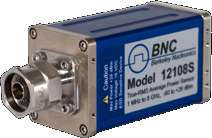
Model 12100 Series USB RF Power Sensors
USB peak and average power sensors for RF and microwave measurement.
User manuals
Full operating and programming manuals for each instrument in the line.
Model 871 User Manual
Operation, modulation, remote programming, and maintenance for the Model 871.
Model 870A User Manual
Touchscreen operation, modulation, and remote control for the Model 870A.
Model 855B User Manual
Multi-output configuration, power control, and programming for the Model 855B.
Model 865B User Manual
Setup, phase-noise modes, and remote operation for the Model 865B.
Model 845 User Manual
Operation, modulation options, and programming for the Model 845.
Model 835 User Manual
Bench operation, options, and remote control for the Model 835.
Model 805-SG User Manual
Configuration and operation for the Model 805-SG fixed source.
Model 845-OEM User Manual
Integration, control interface, and operation for the Model 845-OEM embedded source.
Model 866-M User Manual
Synthesizer setup, switching options, and programming for the Model 866-M.
Model 805-M User Manual
Agile tuning, control, and integration for the Model 805-M synthesizer.
Model 825-M User Manual
Multichannel operation, fast switching, and programming for the Model 825-M.
Model 845-M User Manual
Low-noise setup, channel configuration, and control for the Model 845-M.
Model 865B-M User Manual
Wideband synthesizer operation and programming for the Model 865B-M.
Model 865B-M-40-X User Manual
Multi-channel configuration, phase coherence, and control for the Model 865B-M-40-X.
Model 875 User Manual
Vector modulation, multichannel setup, and programming for the Model 875.
RFS-1000 User Manual
CW and sweep operation, control, and maintenance for the RFS-1000.
Technical notes
Reference reading on phase noise, switching speed, vector modulation, and choosing a source.
How to Choose a Signal Generator
Frequency range, phase noise, switching speed, channel count, and modulation, mapped to the right model.
Understanding Phase Noise
What single-sideband phase noise means, how it is specified, and why it sets receiver and clock-test limits.
Switching Speed and Frequency Agility
How switching time is measured and why microsecond hopping matters for ATE and frequency-hopping test.
Vector Modulation and I/Q
How I/Q vector modulation builds complex waveforms for 5G/6G, SATCOM, and MIMO test.
Application briefs
Where the RF and microwave signal generators go to work.
Radar & Electronic Warfare
Satellite Communications
Quantum Control
5G & 6G Wireless
ATE & Receiver Test
Aerospace & Defense
Antenna & EMC Test
RF Power Sensor: Measurement Principles
RF Power Sensors: Essential Tools
Power Meters and Power Sensors
Power Sensors: Radar & Satellite
A Closer Look at MRI
12100 Power Sensor Temperature Sensitivity
Application notes
Real-world techniques and measurement setups using BNC RF and microwave signal generators.