R&D & University Kits
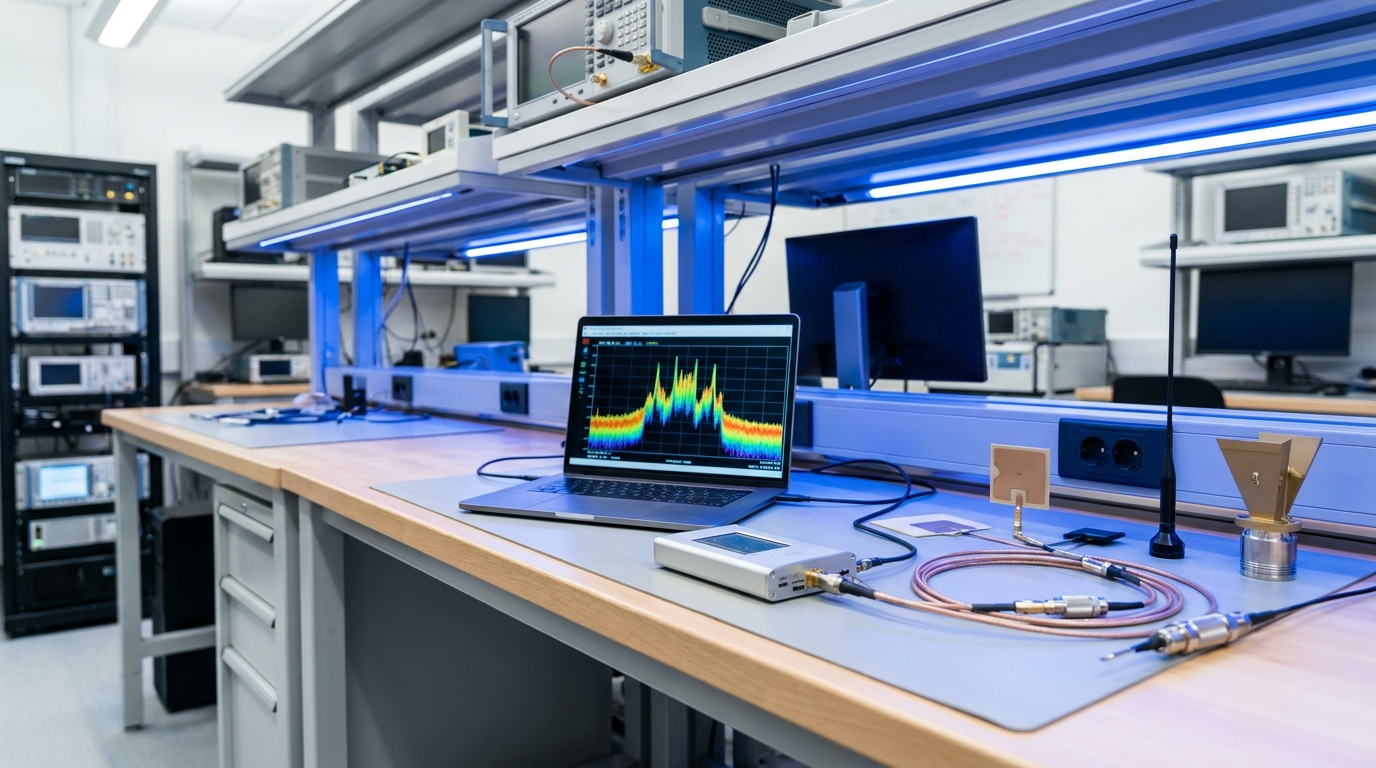
Research labs and university programs share a problem that has little to do with physics. They need real instruments, and they need many of them, on budgets that rarely stretch to a rack of high-end analyzers. A single benchtop unit can serve one bench at a time. A class of twenty students cannot learn modulation, sampling, or detection theory by taking turns at one screen.
Portability is the second constraint. Equipment moves between a teaching lab, a research office, a field demonstration, and the occasional conference table. Gear that needs a cart and a mains outlet stays put, and gear that stays put gets used less. The instrument that travels in a backpack is the instrument that actually gets picked up.
The deepest requirement is openness. A teaching tool that hides its internals teaches nothing about how the measurement is made. Researchers need to script the instrument, pull raw data into their own code, and build experiments the vendor never imagined. A closed box with a fixed front panel is the wrong shape for research. The right tool is programmable to the core.
How the ICX-FieldHawk line solves it
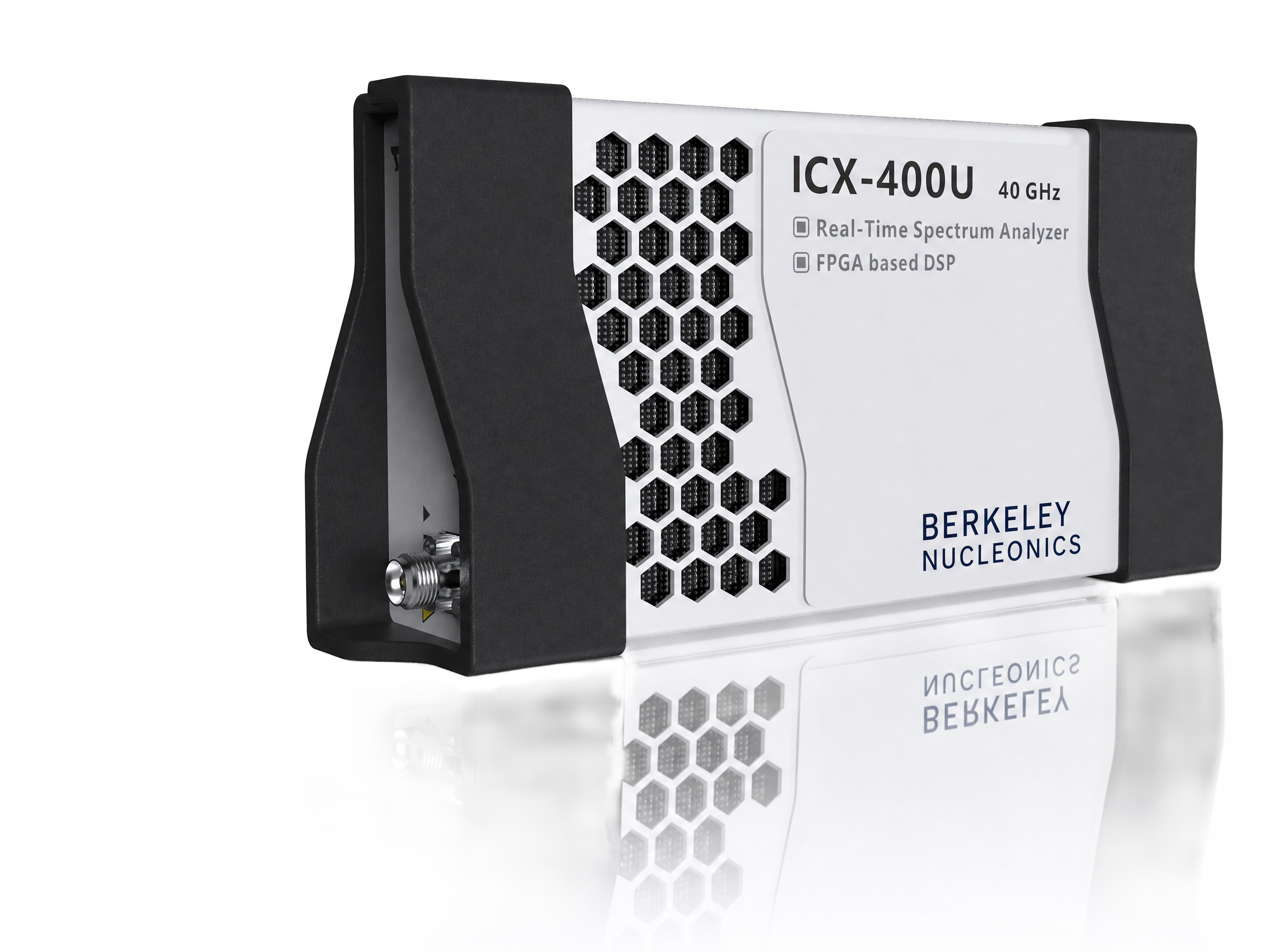
The ICX-FieldHawk-U USB receiver is built to be an affordable lab instrument rather than a sealed appliance. It draws power and data over a single USB connection to a laptop, so a full real-time receiver fits in a bag and runs anywhere there is a host computer. Several units cost what one traditional analyzer costs, which is what lets a department equip a whole class instead of a single station.
What sets it apart for research is the breadth of the open API. The SpecICX-gen3 software exposes control and data through C, C++, C#, Python, MATLAB, LabVIEW, and GNU Radio. A student can drive it from a Python notebook, a controls course can script it from LabVIEW, and a communications lab can stream IQ straight into a GNU Radio flowgraph. The instrument meets each user in the language they already work in, so the learning curve is the subject, not the tool.
For automated test and integration with existing setups, the receiver speaks SCPI for command and control and supports VITA 49 for standardized IQ data transport. That means it drops into scripted benches and interoperates with the wider RF ecosystem rather than forcing a proprietary path. Teach with it, automate with it, and publish from it, all through interfaces that outlast any single project.
Which models and accessories fit
For teaching and benchtop research, the recommended model is the ICX-FieldHawk-U. Its price point, USB form factor, and full open API make it the natural choice for departments outfitting multiple stations or a portable demonstration kit. Buy several and a lab gains hands-on coverage for an entire cohort, with each receiver identical and scriptable.
For courses or projects that also study antenna behavior, gain, and direction finding, add the ANT-100G directional antenna. It turns an abstract lecture on radiation patterns and bearing into a measurement students can run themselves, and it supports research into angle-of-arrival techniques. Where a program needs a field-capable instrument alongside the bench units, the ICX-FieldHawk handheld provides a self-contained display, and the ICX-FieldHawk-R rugged receiver suits outdoor field exercises.
The common thread is that every model shares the same SpecICX-gen3 software and interfaces. Code written against a USB unit in the lab carries over to the handheld and rugged receivers without rework, so a research method developed on the bench transfers cleanly to the field. Learn once, deploy across the line.
| Use | Recommendation |
|---|---|
| Teaching lab and benchtop research | ICX-FieldHawk-U USB receiver |
| Antenna and direction-finding study | ANT-100G directional antenna |
| Field exercises and outdoor labs | ICX-FieldHawk handheld / ICX-FieldHawk-R rugged |
| Programming environments | C, C++, C#, Python, MATLAB, LabVIEW, GNU Radio; SCPI and VITA 49 |
Recommended configuration
A practical teaching kit is a set of ICX-FieldHawk-U receivers, one per student bench, each paired with a laptop running SpecICX-gen3 and the API bindings for your curriculum, whether Python, MATLAB, LabVIEW, or GNU Radio. Add one or two ANT-100G antennas for the antenna and direction-finding modules. The result is an affordable, portable, fully open lab that scales with class size and grows into research use.
For a quick question, chat with an engineer at berkeleynucleonics.com.