
Semiconductor HV Test & Reliability
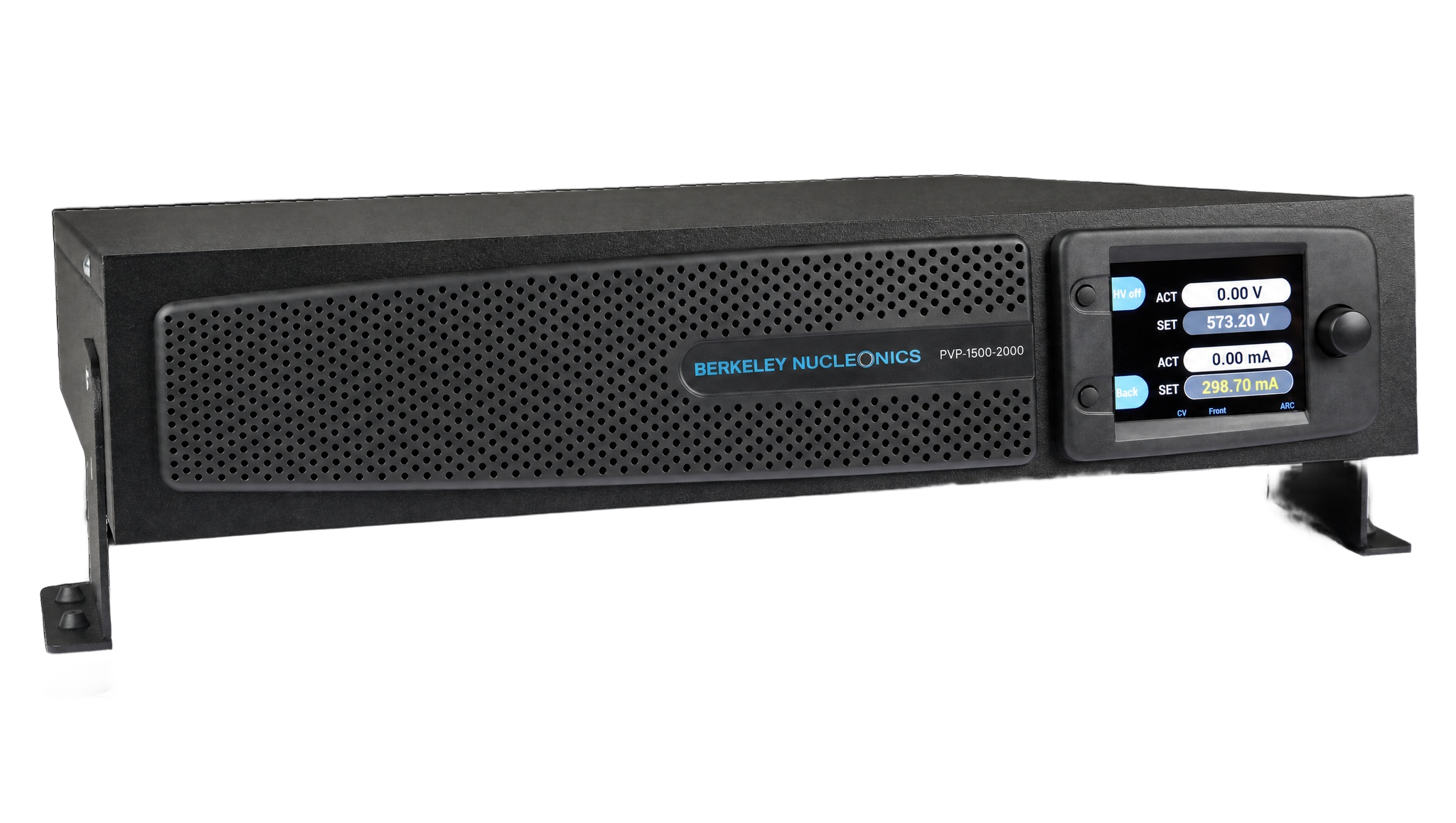
Every power device, diode, and isolation structure on a wafer carries a voltage rating. The job of high-voltage test is to prove that rating is real. That means applying controlled stress, watching for the onset of breakdown, and measuring the small leakage currents that flow well below the point of failure. The numbers that come out of this work feed directly into datasheets, qualification reports, and the reliability models that customers depend on.
The measurements are unforgiving. Breakdown voltage on a gate oxide or a junction has to be located within a fraction of a percent, because a device binned at the wrong grade either fails in the field or leaves margin on the table. Leakage currents at operating voltage are often in the nanoamp range, so any ripple, drift, or noise on the supply rail hides the very signal the test is trying to read. Reliability campaigns add another demand: the same stress condition has to be reproduced across thousands of parts, day after day, with results that line up.
Then there is polarity. Test plans for complementary devices, dielectric studies, and bias-temperature work frequently call for both positive and negative stress on the same fixture. Swapping cables and supplies between runs wastes time and introduces error. The cleaner answer is a supply that reverses electrically, under software command, between sequences.
How the BNC PVP-Series line solves it
The BNC PVP-Series is a fully digitally regulated DC high-voltage supply, built around a microcontroller and FPGA rather than analog control loops. That architecture is what gives reliability test the stability it needs. Voltage is set across roughly 0.01 to 100 percent of nominal with 16-bit resolution, line regulation holds tighter than plus or minus 0.01 percent of nominal across a 10 percent mains swing, and stability stays within 0.01 percent of nominal over an eight-hour shift. Ripple is held to 0.01 percent of nominal plus a small fixed term, so the rail under a leakage measurement is quiet enough to see currents in the nanoamp range.
Response time matters as much as steady-state accuracy. The PVP-Series settles to within 0.1 percent of nominal in under 1 millisecond, so a step to a new stress level lands quickly and the device sees a clean, well-defined condition rather than a slow drift. Current regulation carries the same 16-bit resolution and sub-millisecond response, which lets the supply act as a controlled current source during a breakdown sweep and limit cleanly the moment the device lets go.
Polarity is handled in the hardware. Reversible models switch between positive and negative output, earth-referenced, so a single instrument covers both halves of a complementary test plan. The supply reaches the operator over Ethernet and RS232 using a standard SCPI command set, which is what makes thousands of identical, time-stamped runs practical inside an automated prober or a rack-based reliability oven controller.
Which PVP-Series models and options fit
Most semiconductor device and dielectric work lives between 5 kV and 30 kV. The choice comes down to the rating you need to clear and the current the part draws under stress.
| Need | Recommended PVP-Series model | Rating |
|---|---|---|
| Mid-voltage device and oxide stress | PVP-5000-400 / PVP-5000-600 | 5 kV, 400 to 600 mA, reversible |
| Power device and isolation breakdown | PVP-10000-200 / PVP-10000-300 | 10 kV, 200 to 300 mA, reversible |
| High-voltage junction and passivation | PVP-20000-25 | 20 kV, 25 mA |
| Extreme standoff and dielectric work | PVP-30000-17 | 30 kV, 17 mA |
Two retrofittable options earn their place on a reliability bench. Ramp Control sets a defined voltage gradient, from 1 V/s up to ten times nominal per second, so a breakdown sweep rises at a repeatable rate instead of a step. That turns a destructive test into a measurable one and keeps results comparable across operators. Arc Detection watches for flashover, reports the event, and can shut the output off the moment a device fails, which protects the fixture, captures the failure point cleanly, and shortens the path to a root-cause read. For test plans that demand both stress polarities, specify the reversible polarity variant rather than a fixed-polarity unit.
Recommended configuration
For a general device reliability cell covering power diodes and discrete transistors, a PVP-10000-300 in the reversible configuration is the practical center of the range. It clears common power-device ratings with headroom, supplies enough current to drive a breakdown sweep, and reverses polarity under software for complementary plans. Add Ramp Control for repeatable breakdown gradients and Arc Detection with output shut-off to protect the prober and capture the failure point.
Labs qualifying high-voltage junctions or passivation should pair a PVP-20000-25 or PVP-30000-17 with the same two options, accepting the lower current ceiling that comes with the higher voltage class. Drive everything over Ethernet with SCPI, log the time-tagged event record the supply keeps, and rack-mount the 2U enclosure alongside the prober controller for a clean, automated reliability station.
Talk to an application engineer
Berkeley Nucleonics can help you match a PVP-Series model and option set to your reliability test plan. Call 800-234-7858 or email info@berkeleynucleonics.com.
For a quick question, chat with an engineer at berkeleynucleonics.com.