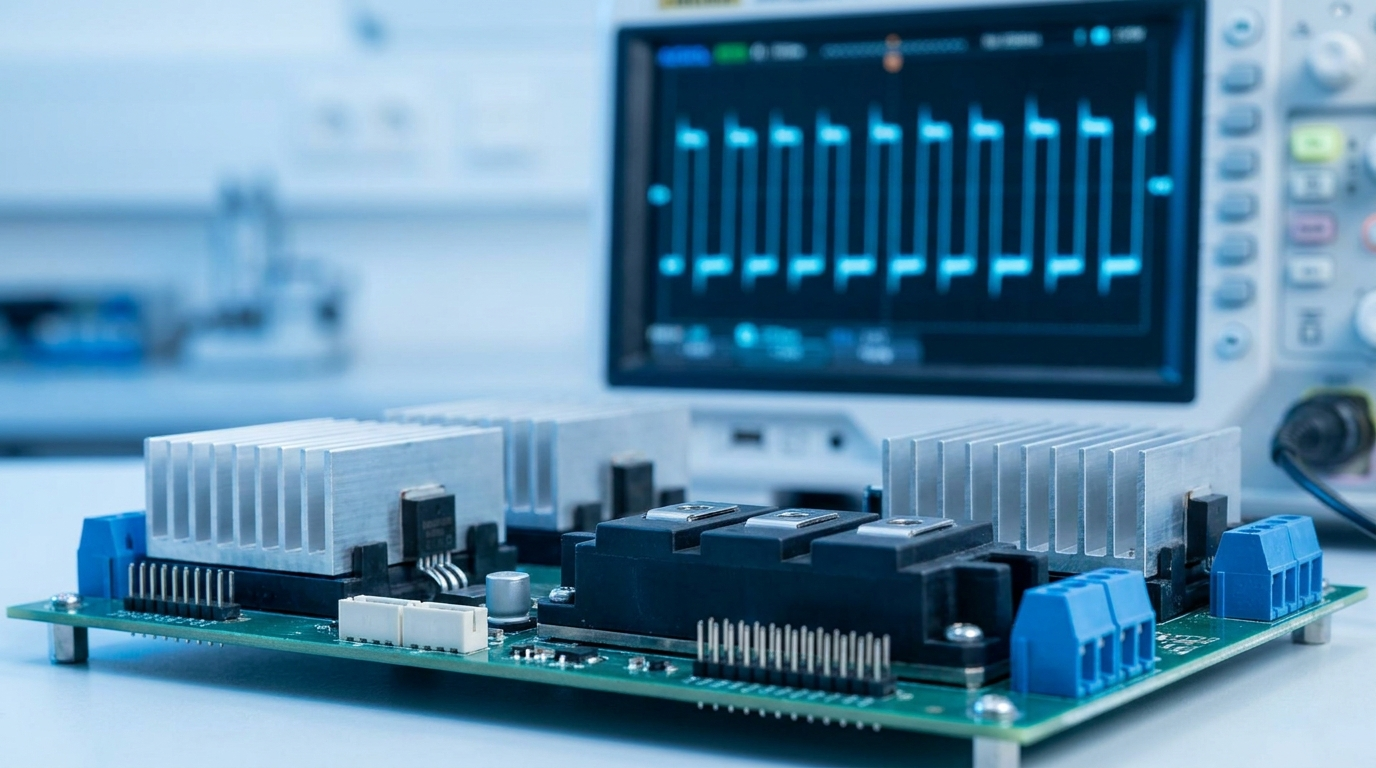
Double-Pulse Test for SiC & GaN
The double-pulse test is the standard way to characterize a power switch. Two gate pulses drive the device under test while an inductive load sets the current, and the oscilloscope captures the device through turn-on, turn-off, and the reverse recovery of the freewheeling diode. From those waveforms come the numbers that define the part: switching energy, voltage and current overshoot, di/dt and dv/dt, and the safe operating boundaries. It is the test that tells a power-electronics designer whether a device will survive in a real converter.
Silicon carbide and gallium nitride make this test harder than it used to be. Wide-bandgap devices switch fast, with edges measured in tens of nanoseconds and slew rates that silicon never reached. That speed is the whole point, but it puts strict demands on the bench. The DC bus that holds the test voltage has to be steady and quiet, because any ripple or droop on the rail shows up directly in the measured loss numbers and corrupts the comparison between devices. The supply also has to charge the bus capacitor, sit at the set voltage, and hold it through the pulse sequence without sagging when the device draws.
Then the bench has to reset and run again. Characterization sweeps the same device across many bus voltages and load currents, and a production or qualification flow repeats that across many parts. The supply needs to step to a new bus voltage quickly, settle, and report that it is ready, so the next pulse fires against a known condition.
How the BNC PVP-Series line solves it
The BNC PVP-Series gives a double-pulse bench the clean, stable rail it needs. The supply is fully digitally regulated with a microcontroller and FPGA, so the bus voltage is held tightly: ripple is specified at 0.01 percent of nominal plus a small fixed term, line regulation is tighter than plus or minus 0.01 percent of nominal across a 10 percent mains swing, and stability holds within 0.01 percent of nominal over an eight-hour session. A quiet rail means the switching-loss numbers reflect the device, not the supply.
Fast response is the other half of the story. The PVP-Series settles to within 0.1 percent of nominal in under 1 millisecond, which lets the bench step the bus to a new characterization point and fire the next pulse without waiting on the supply to catch up. That sub-millisecond response, combined with 16-bit setting resolution across roughly 0.01 to 100 percent of nominal, makes fine voltage sweeps practical and repeatable. The supply charges the bus capacitor, regulates against the load the pulse presents, and reports its state over the on-board interface.
Control is automation-ready. Ethernet and RS232 with a standard SCPI command set let the supply take bus-voltage commands from the same script that drives the pulse generator and the scope, and the time-tagged event log records the run. Rack the 2U enclosure into the double-pulse bench beside the rest of the instrumentation.
Which PVP-Series models and options fit
Wide-bandgap double-pulse work usually lives between 1.5 kV and 10 kV, set by the device blocking voltage and the bus level the characterization plan calls for.
| Need | Recommended PVP-Series model | Rating |
|---|---|---|
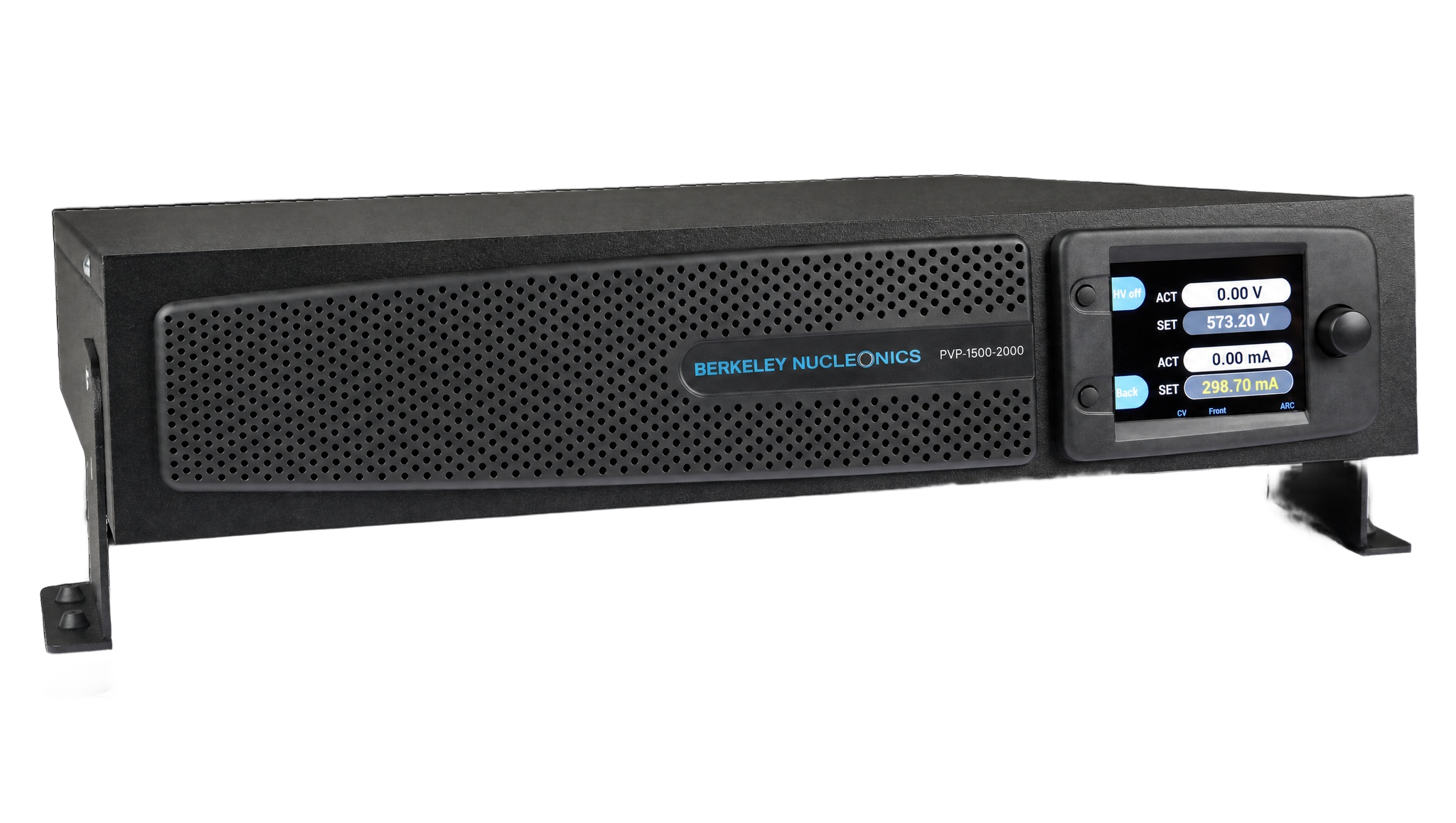
| GaN and low-voltage SiC, high current | PVP-1500-2000 | 1.5 kV, 2000 mA, reversible |
| 650 V to 1700 V SiC bus characterization | PVP-5000-600 | 5 kV, 600 mA, reversible |
| High-blocking SiC modules and stacks | PVP-10000-300 | 10 kV, 300 mA, reversible |
For a double-pulse bench the option that matters most is Arc Detection. Wide-bandgap devices that fail during a switching test fail fast, and a supply that detects the flashover and shuts the output off protects the fixture, the scope front end, and the surrounding instrumentation, while capturing the exact point of failure. Ramp Control is useful for bringing the bus capacitor up at a defined gradient rather than an inrush step, which is gentler on the bus film capacitors and gives a controlled, repeatable charge. Choose the reversible variant where the characterization plan exercises both polarities of the device.
Recommended configuration
For a general SiC double-pulse bench covering common 650 V to 1700 V parts, a PVP-5000-600 in the reversible configuration is the right center. It supplies the bus voltages those devices need with current headroom to charge the bus capacitor and hold the rail through the pulse train. Add Arc Detection with output shut-off as the primary protection and Ramp Control for a controlled bus charge.
Labs characterizing GaN or low-voltage devices at high current should use the PVP-1500-2000, which trades voltage ceiling for current. Groups working on high-blocking SiC modules step up to the PVP-10000-300. In every case, drive the supply over Ethernet with SCPI from the same sequencer that controls the gate driver and the oscilloscope, and rack the 2U unit into the bench.
Talk to an application engineer
Berkeley Nucleonics can help you match a PVP-Series model and option set to your double-pulse bench. Call 800-234-7858 or email info@berkeleynucleonics.com.
For a quick question, chat with an engineer at berkeleynucleonics.com.