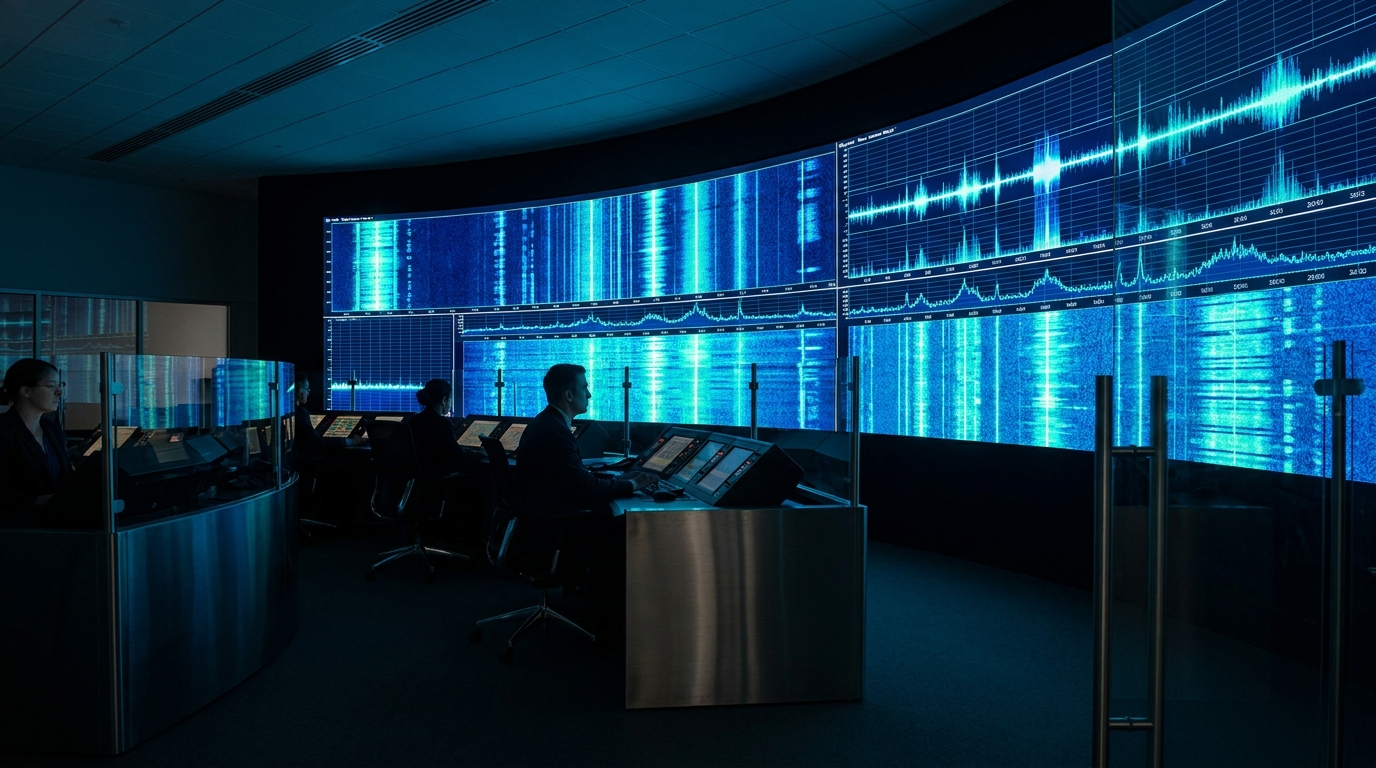
Spectrum Monitoring
The radio spectrum is a shared, finite, and increasingly crowded resource. Someone has to keep it orderly. Spectrum monitoring is the discipline of watching the bands over time, confirming that licensed users get the channels they paid for, and spotting the signals that should not be there. It is part traffic control, part detective work, and part recordkeeping.
What makes it hard is that the interesting events are rarely sitting still waiting to be found. An interferer might key up for a few seconds, then go quiet for an hour. Occupancy shifts by time of day and day of week. A complaint comes in long after the offending transmission has stopped. To monitor well you have to cover a wide span of frequencies, watch them continuously or on a schedule, and capture enough detail that a brief, intermittent event is not lost between sweeps. Then you have to keep the evidence. A verbal account of interference convinces no one. A recorded, time-stamped capture that can be replayed and analyzed is what holds up in an enforcement case.
How the ICX-FieldHawk line solves it
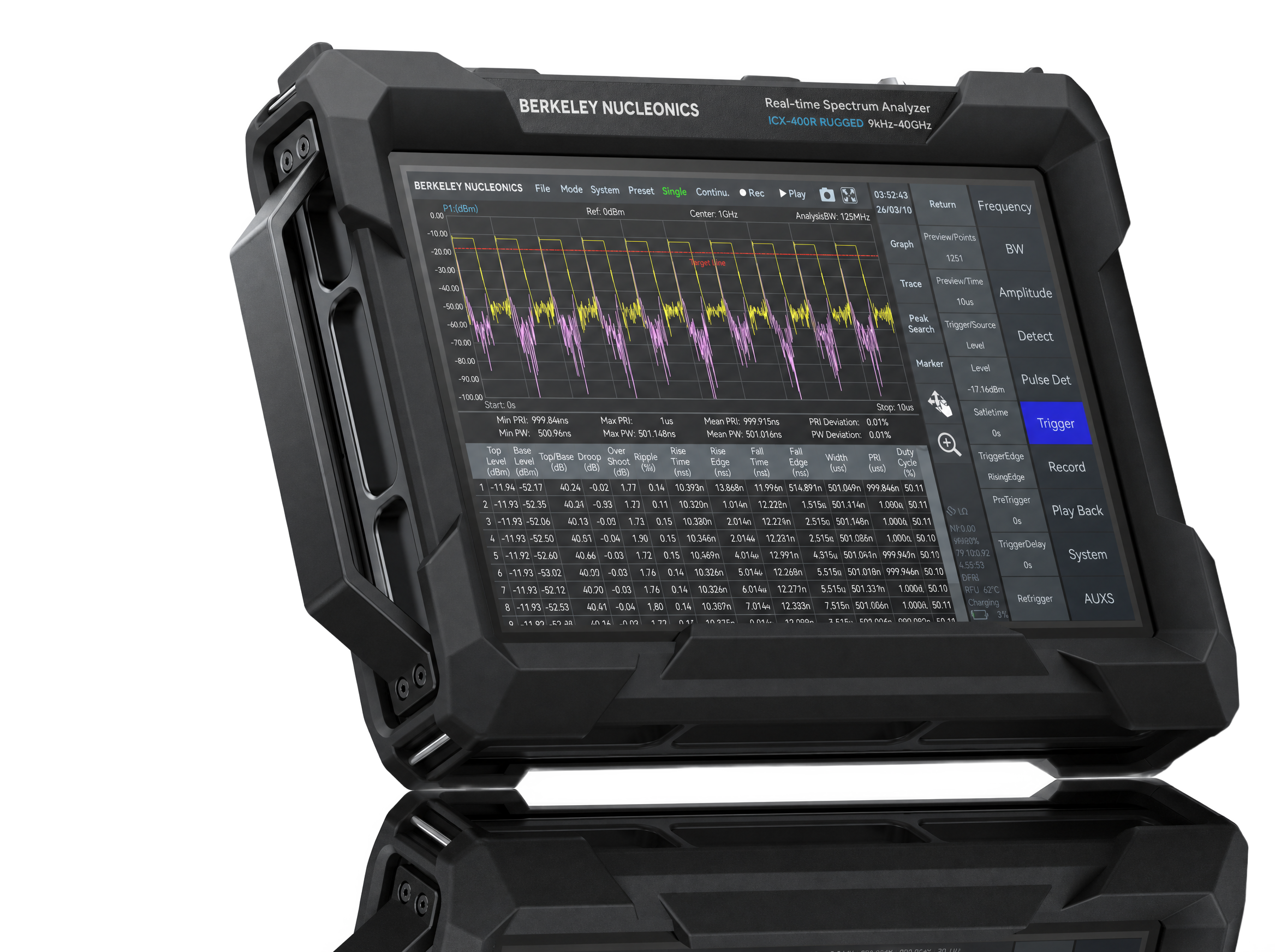
The ICX-FieldHawk platform pairs wide frequency coverage with the monitoring tools that make long watches productive. SpecICX-gen3 firmware turns the analyzer from a snapshot instrument into a surveillance one.
Occupancy and heat-map views show how busy each channel is across a span and how that activity changes over time. Instead of staring at a live trace, an operator reads a colored map of the band where persistent users, bursty intruders, and quiet gaps all stand out at a glance. MSCAN, the memory scan function, steps through a stored list of channels and frequencies so a monitoring station can cycle through every band of interest automatically, catching activity on each one without manual retuning.
Record and playback is what gives the work its teeth. The analyzer captures spectrum to file, complete with timestamps, so a fleeting interference event lives on after it ends. An investigator can replay the capture, zoom into the moment, and measure the offending signal at leisure. That recording is also the artifact that turns a suspicion into a case, and it travels with the report into any regulatory or enforcement proceeding.
Which models and accessories fit
For mobile monitoring and roaming spot checks, the ICX-FieldHawk Handheld lets an officer respond to a complaint, capture the offending signal on site, and walk away with a record. It is the instrument for the investigator who has to go to where the interference is.
For fixed or semi-permanent monitoring stations, the ICX-FieldHawk-U USB analyzer integrates into an unattended setup. Connected to a host computer, it can run MSCAN cycles and scheduled recordings around the clock, building a continuous picture of band occupancy without anyone standing watch. For posts exposed to the elements, the ICX-FieldHawk-R Rugged variant keeps the same monitoring capability working through heat, dust, and weather.
When the job turns from watching to locating, the ANT-100G directional antenna gives the operator a way to take a bearing on an interferer. Its 500 MHz to 10 GHz coverage and switchable pre-amplifier make it the bridge between monitoring a band and tracking down the source inside it.
Use cases in the field
Regulators use continuous monitoring to police band use and confirm that licensees stay within their assignments. Enforcement teams use record and playback to investigate interference complaints and build the evidence that supports a citation or a shutdown. Network and facility operators use occupancy and heat-map views to understand how their spectrum is actually being used, planning around congestion and catching unauthorized transmitters before they cause real harm.
Recommended configuration
For a monitoring program that mixes fixed watch with mobile response, deploy an ICX-FieldHawk-U USB analyzer at the station for unattended MSCAN cycles and scheduled record and playback, and equip field officers with an ICX-FieldHawk Handheld for on-scene capture, all running SpecICX-gen3. Outdoor or harsh-environment posts should use the ICX-FieldHawk-R Rugged body, and any team that needs to chase a source to its location should add the ANT-100G directional antenna.
To design a monitoring setup around your bands, schedule, and reporting needs, contact Berkeley Nucleonics at info@berkeleynucleonics.com or 800-234-7858.
For a quick question, chat with an engineer at berkeleynucleonics.com.