Digital delay and pulse generators built for laser synchronization, accelerator timing, and high-current fire sets. The line runs from a book-sized six-channel unit to a 24-channel rackmount system, from 1 ps femtosecond delays to 25 A drive pulses. Pick the resolution, channel count, and output your experiment needs.
Every channel starts from a trigger and ends at a precisely placed edge. The line groups by what you need most: digital delay and pulse generation, high channel density, raw output current, femtosecond resolution, or fast high-performance pulses. Find the group that matches your mission, then open the datasheet for the exact model.

Precision digital delay and pulse generators for synchronizing complex events. The Model 525 brings six channels in a book-sized, USB-powered package at an economy price, and replaces the discontinued Picosecond Pulse Labs PSPL2600C. The 575 and 577 add flexible form factors and rich triggering, with the 588 and 725 in rackmount and multi-trigger roles.

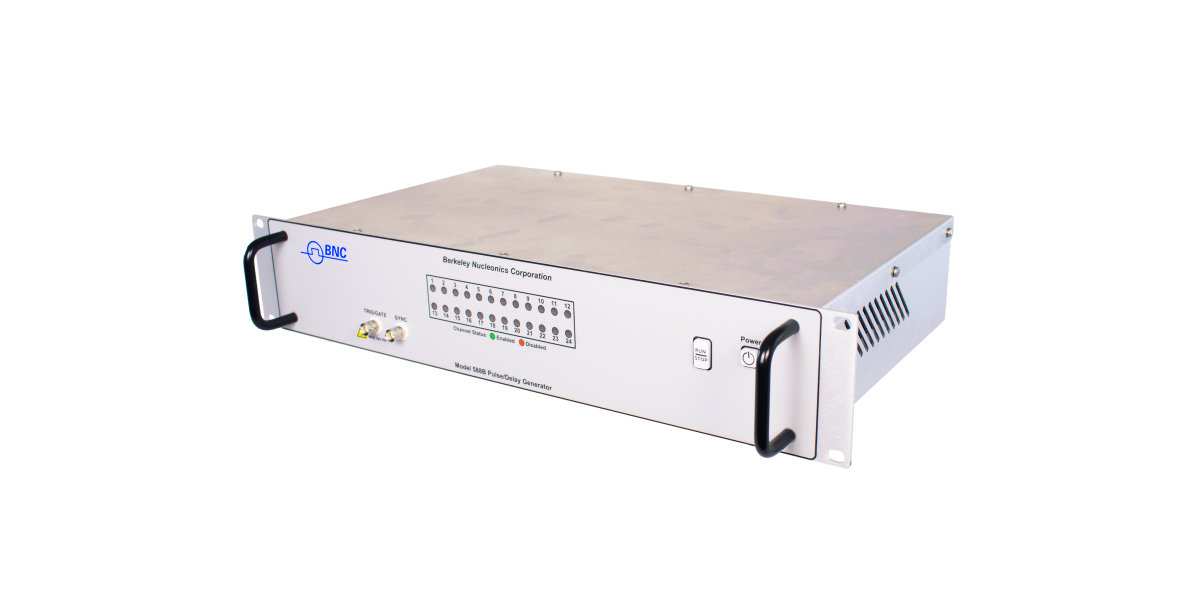
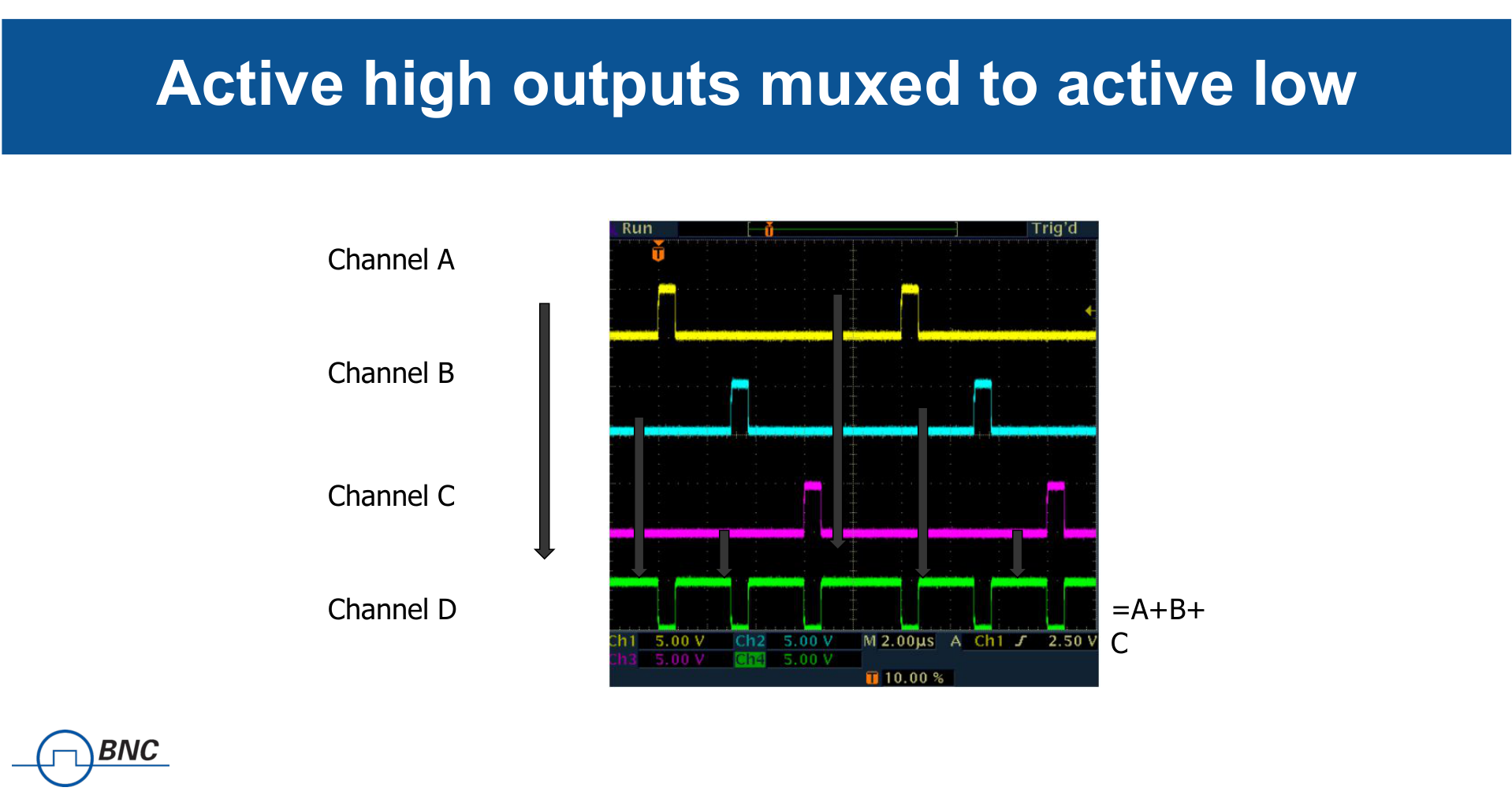
The Model 588B packs 12 or 24 independent channels, up to 36 outputs in advanced configurations, into a 2U rackmount. It pairs 250 ps delay resolution with sub-5 ps RMS jitter, so a single box can sequence ICCD gating, multiple pump lasers, and radar simulation with the channel-to-channel precision those jobs demand.

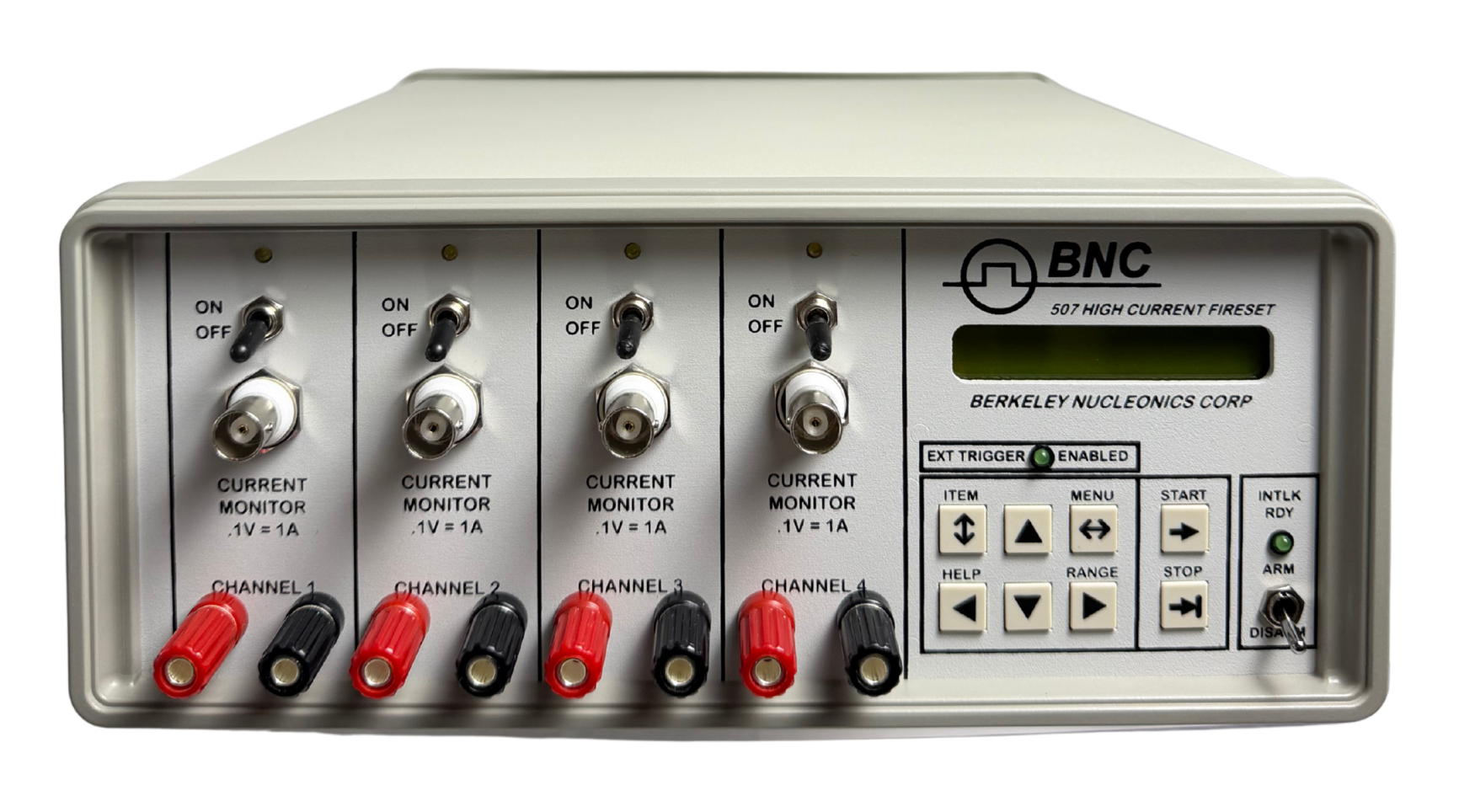
When the load is a squib, detonator, or pyrotechnic initiator, you need current, not a logic edge. The Model 507 delivers adjustable pulses up to 25 A across independent channels. The Model 508 trades peak current for precision, with 6 A drive, built-in 4-wire resistance measurement, safety interlocks, and Bruceton and Neyer statistical firing modes.

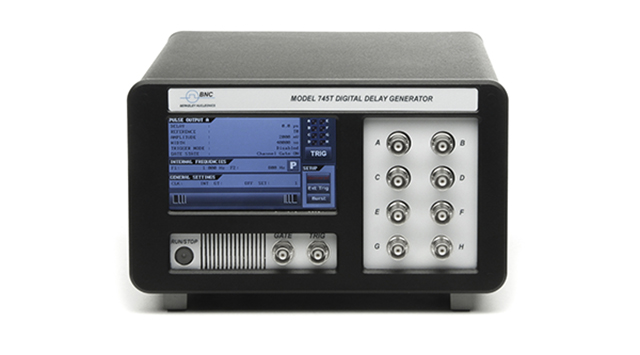
The Model 745T sets the benchtop timing benchmark. It offers 1 ps delay resolution and femtosecond-class jitter across four front-panel channels, with four more optional on the rear. Channel grouping pushes jitter below 5 ps with 250 fs resolution, the precision large laser systems and high-end research need.

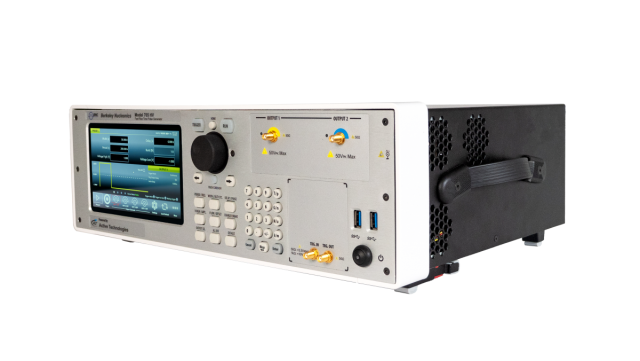
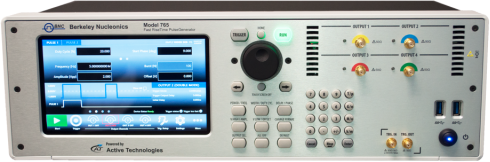
The Model 765 is the fastest-rise-time pulse generator in the line, with 70 ps edges, an 800 MHz rep rate per channel, and 4 ps RMS jitter. Programmable amplitude from 10 mV to 5 Vpp and double, triple, and quad pulse modes suit semiconductor, radar, and big-physics work. The 765-HV variant extends that performance to high-voltage output.
Resolution spans 1 ps on the Model 745T, 10 ps on the Model 765, and 250 ps on the 588B, down to 4 ns steps on the portable Model 525.
From two independent outputs on the fire sets to six on the 525 and 12 or 24, up to 36 outputs, on the high-density 588B rackmount.
The 588B holds sub-5 ps RMS jitter, the 765 reaches 4 ps period jitter, and the 745T drops below 5 ps with channel grouping.
The Model 765 delivers 70 ps edges at an 800 MHz rep rate. Delay models give clean TTL or adjustable outputs with nanosecond-class rise.
Internal rate generators, external trigger and gate, burst and single-shot modes, plus a 10 MHz to 80 MHz clock reference for multi-instrument sync.
Remote control over USB, RS-232, and Ethernet, with SCPI, LabVIEW drivers, and web interfaces on the higher-end models. Verify per model.
Each application ships with a brief covering the timing challenge, the workflow, and the configuration that fits. Click for more or submit your application.
Synchronize colliders, photomultipliers, and detector arrays. The 745T and 765 deliver the picosecond delays and low jitter big-physics timing demands.
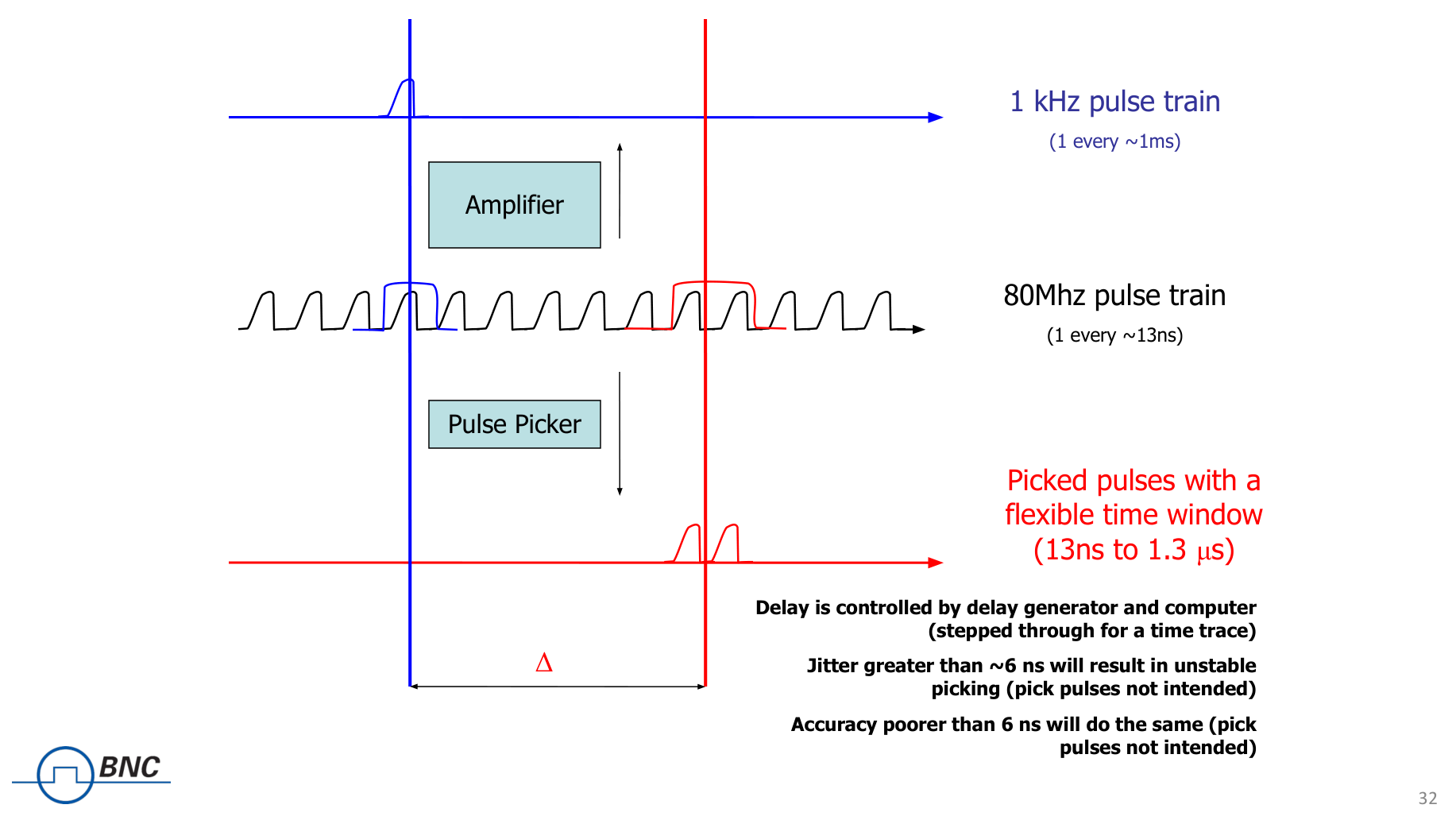
LasersGate Q-switches, fire flash lamps, and drive Pockels cells with the channel-to-channel timing that pump-probe and amplifier chains require.
LiDARTrigger the source, gate the receiver, and time the return. Low jitter keeps range resolution tight across single-shot and burst ranging.
QuantumSequence AOMs, shutters, and detection windows for trapped-ion and cold-atom experiments, where one drifting edge costs a run.
ProductionStable triggering for automated test, with the 507 and 508 fire sets handling squib, igniter, and ballistics testing on the line.
MedicalGate ICCD cameras and time-resolved imaging, and coordinate detection windows for PIV, fluorescence, and gated medical imaging research.
Start with the difference between delay and pulse, then check how jitter and triggering shape your result.

A delay generator places precise edges in time. A pulse generator shapes the amplitude and width of the pulse itself. Many BNC models do both, which is why the right choice comes down to resolution, jitter, channel count, and output. These technical notes walk through the tradeoffs so you can match the instrument to the experiment.
Talk to a Berkeley Nucleonics engineer about the resolution, jitter, channel count, and output that fit your timing or pulse application. Call 800-234-7858 or write info@berkeleynucleonics.com.
Get a quote or demo