EMI / EMC Pre-Compliance Testing
Every electronic product has to pass emissions testing before it ships, and the accredited compliance house is where that gets settled. The trouble is that a formal test slot is expensive, scheduled weeks out, and brutal when it fails. A single emission a few dB over the limit sends the design back to engineering, and the whole cycle repeats. Teams that wait for the compliance house to find their problems pay for it in time and money they did not plan for.
The fix is to find those emissions earlier, during R&D, on your own bench. That sounds simple until you try it. The offending signal is often a broadband impulsive burst from a switching supply, or a narrow-band spur from a clock harmonic, sitting low in the ambient noise of a normal lab. A swept analyzer steps across the band one slice at a time, so an intermittent impulsive event can fire and fade in the gap between sweeps and never show up. You end up chasing a fault you cannot reliably see.
What pre-compliance work really needs is a way to watch the whole band at once, hold onto rare events long enough to recognize them, and pull a weak spur out of the noise floor where it hides. Seeing the spectrum is not enough. You have to see the spectrum the way it actually behaves over time.
How the ICX-FieldHawk line solves it
The ICX-FieldHawk receivers process the band in real time rather than sweeping it, so the full window is under observation continuously. Gap-free capture means an intermittent impulsive burst is caught the moment it fires, not lost between passes. For emissions work, that single property changes the odds: the events that slip past a swept analyzer are exactly the ones that fail a formal test.
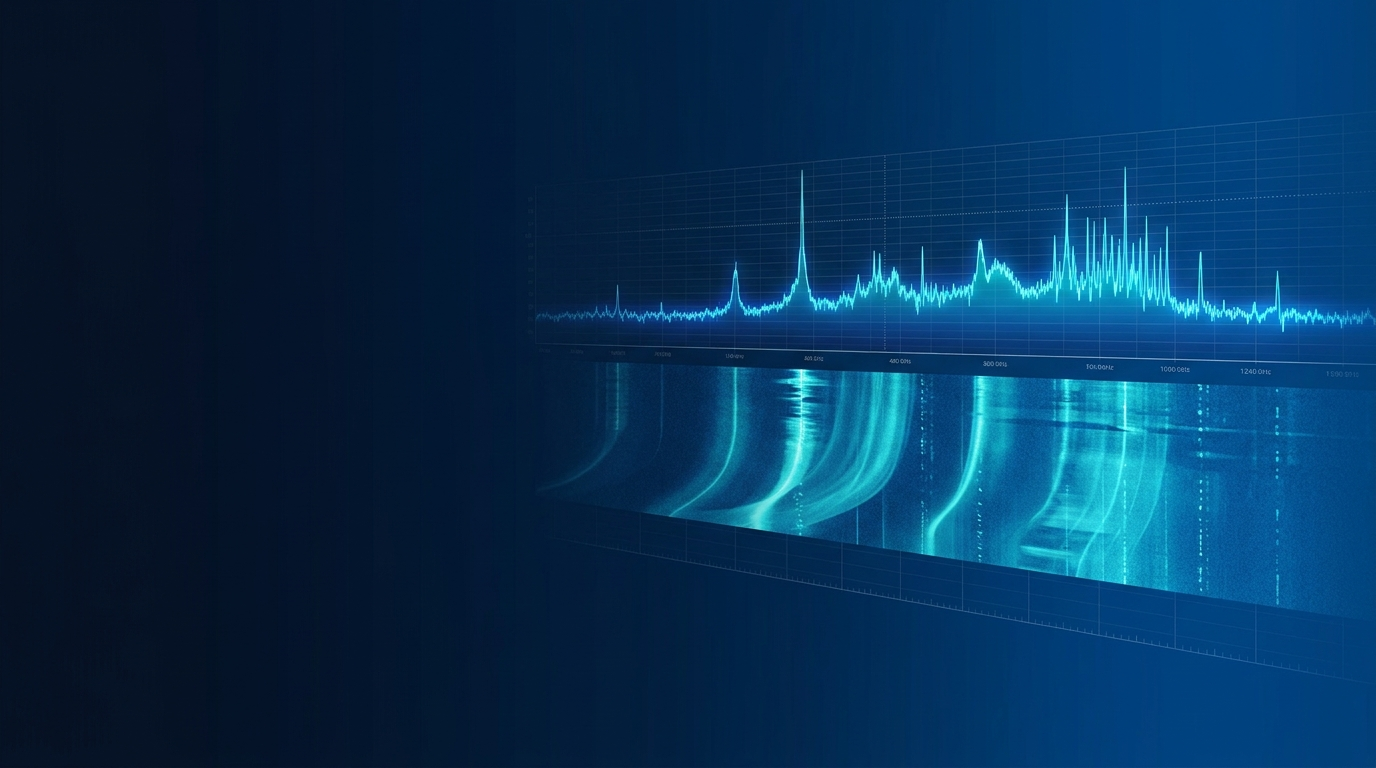
Persistence and max-hold displays do the rest. A persistence view shows how often and how strongly the spectrum is occupied, separating a constant carrier from a rare burst by how the trace paints over time. Max-hold accumulates the worst case, so a broadband impulsive event or a narrow spur that appears once leaves a permanent mark on the display. A signal buried in ambient noise that a single trace would average away stands out clearly once it has been held.
SpecICX-gen3 firmware ties this together with spectral density visualization and the controls to zoom from a wide survey down to a single suspect harmonic. An engineer can sweep a board, spot the emission, characterize it, and verify a mitigation, all on the bench, before committing to a paid compliance slot. The goal is simple: walk into the chamber already knowing you will pass.
Which models and accessories fit
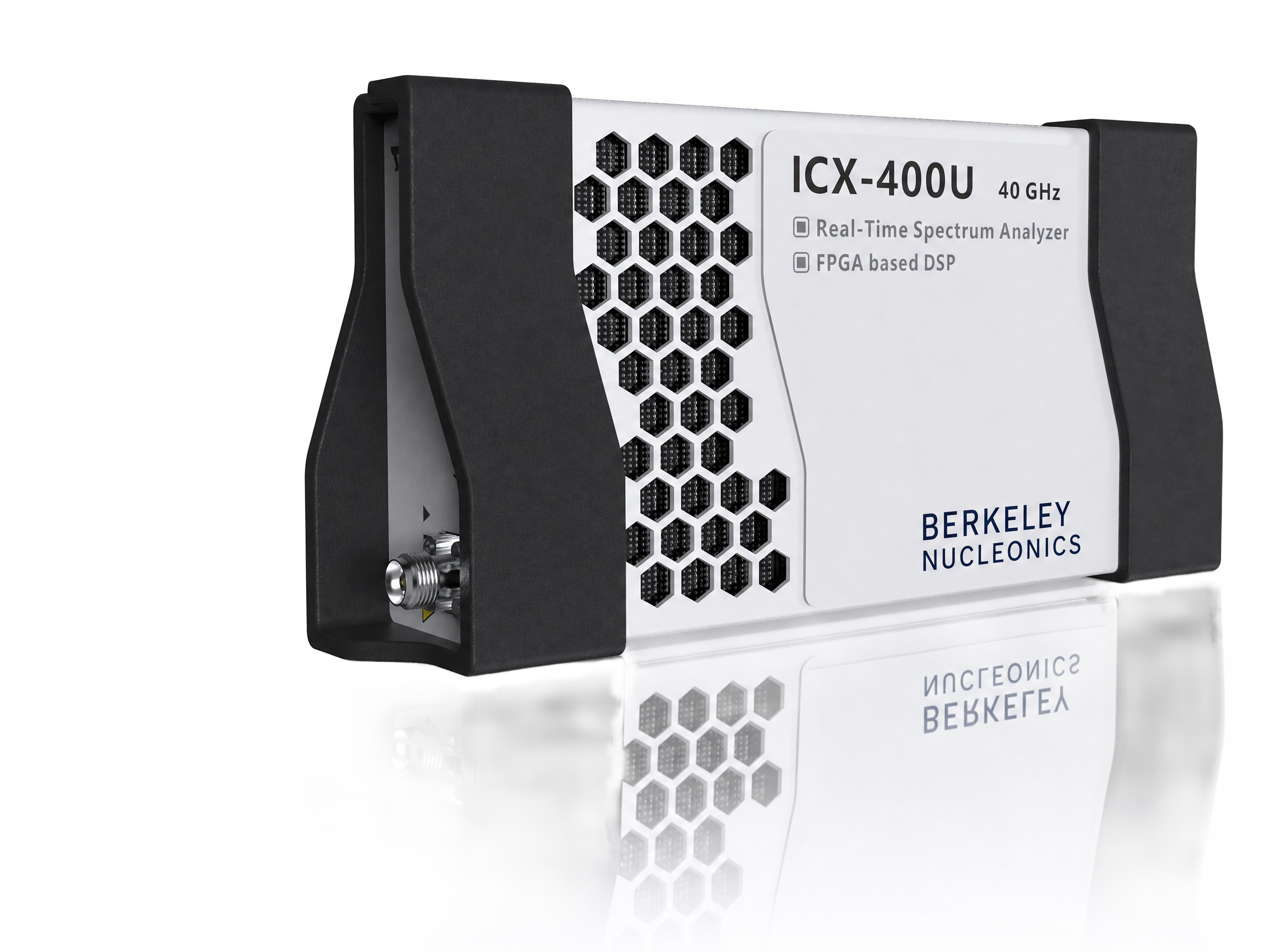
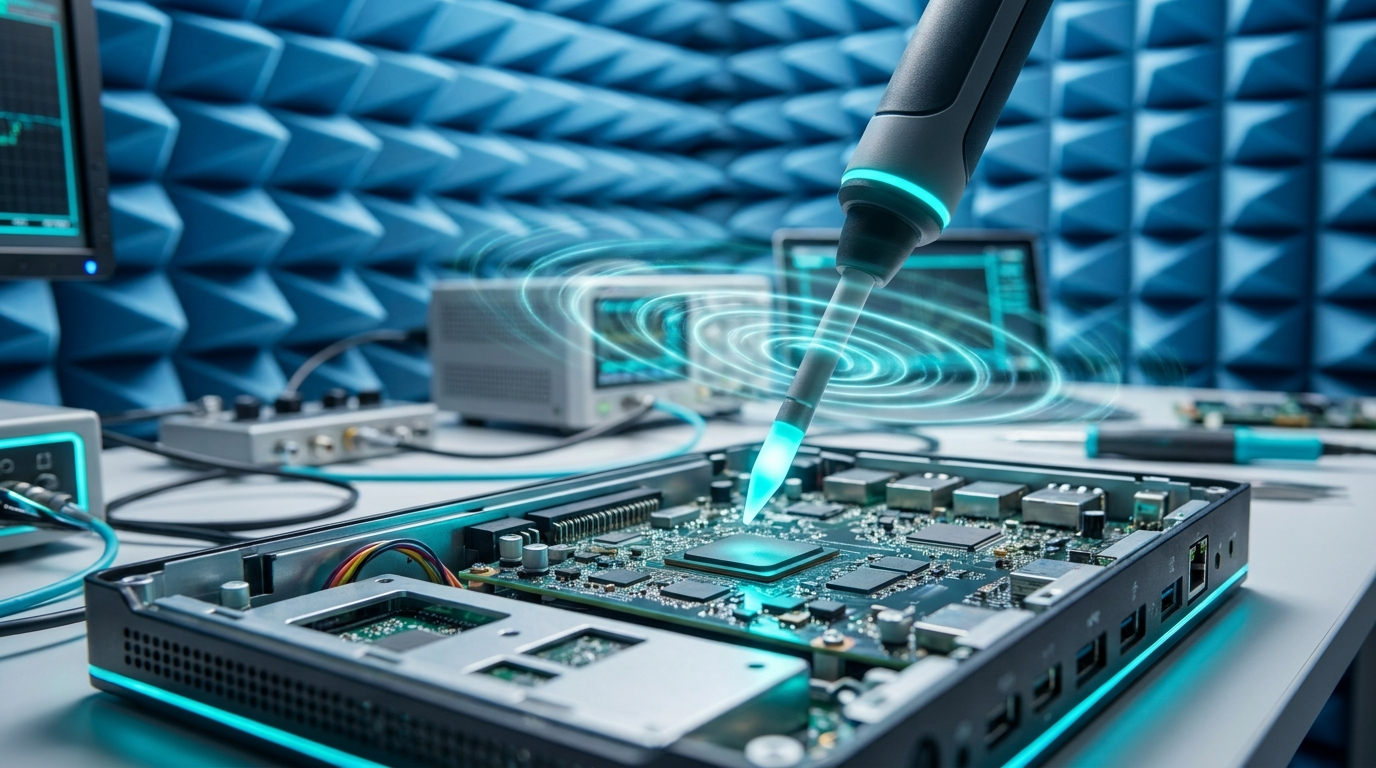
For bench emissions work, the recommended platform is the ICX-FieldHawk-U USB core module. It connects to a laptop or workstation, turning it into a full real-time analyzer with the persistence and max-hold tools that pre-compliance work depends on. Driven through a near-field probe set, it lets an engineer hover over a board, a cable, or a connector and localize the source of an emission down to the component, not just confirm that one exists.
Pair the receiver with the ANT-100G antenna for radiated measurements at a short distance, approximating the kind of over-the-air pickup a formal test antenna would see and helping correlate a near-field find with a far-field emission. For a fixed bench station, the same real-time engine runs under SpecICX-gen3 as a benchtop setup, giving a repeatable, documented pre-compliance position that engineering can return to between design revisions.
| Need | Recommended model | Why |
|---|---|---|
| Bench emissions diagnostics | ICX-FieldHawk-U | Real-time persistence and max-hold via a laptop or workstation |
| Source localization | ICX-FieldHawk-U + near-field probe | Hover over a board to find the emitting component |
| Radiated short-distance pickup | ANT-100G | Correlate a near-field find with a far-field emission |
Recommended configuration
A practical pre-compliance bench centers on the ICX-FieldHawk-U running SpecICX-gen3 with persistence, max-hold, and spectral density visualization enabled, driven through a near-field probe setup for source localization. Add an ANT-100G for short-distance radiated measurements. Stand the same configuration up as a fixed benchtop station so the team has a repeatable position to test against between design revisions. That setup catches impulsive noise and narrow spurs early, points to the source, and verifies the fix before the design ever reaches a paid compliance slot.
For a quick question, chat with an engineer at berkeleynucleonics.com.