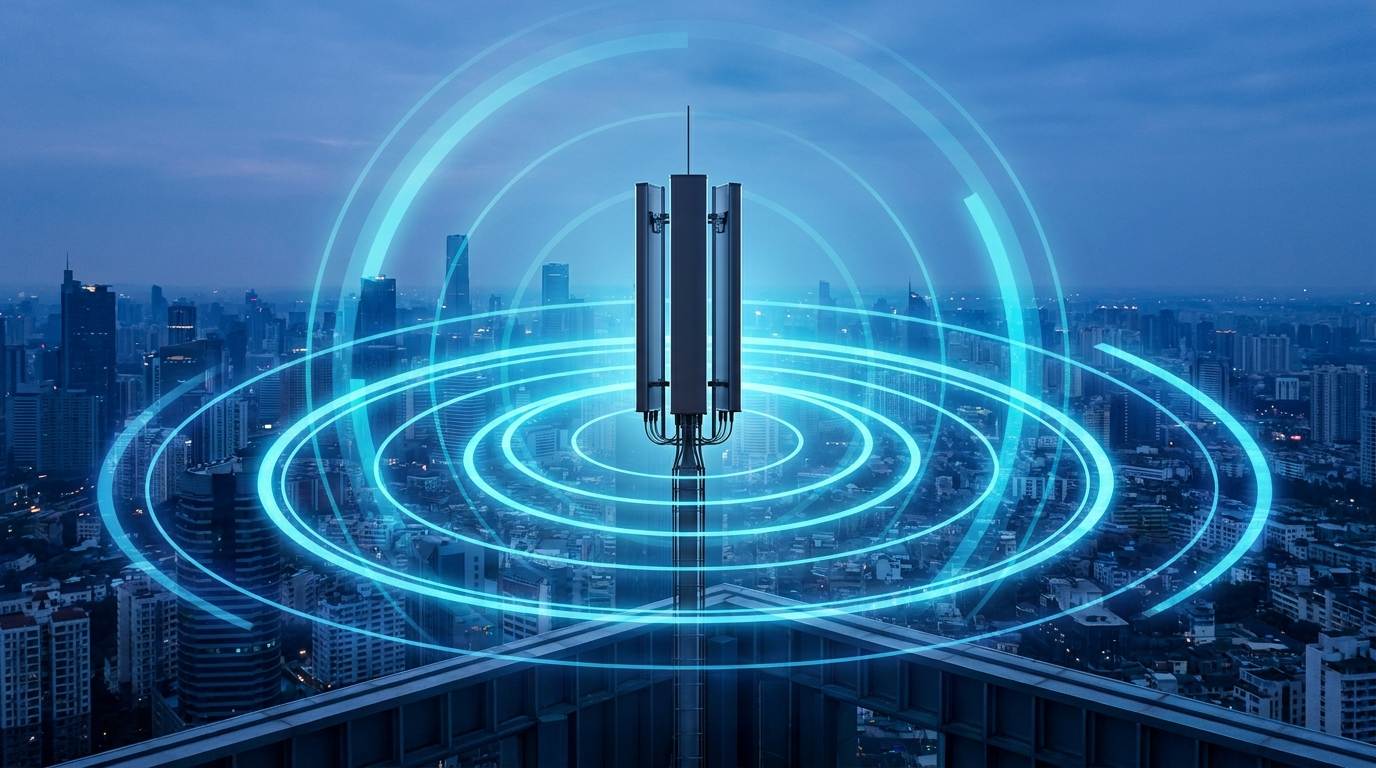
5G & Cellular Coverage
Cellular coverage is a promise made in radio. The network plan says a cell should reach a neighborhood at a usable signal level. Whether it actually does is a field question, and the only honest answer comes from measurement. Operators and integrators run coverage surveys to confirm that what was designed is what got built, to find the gaps before subscribers do, and to plan where the next site should go.
5G makes this harder in two ways. First, the spectrum is wide and fragmented, from sub-1 GHz low band through mid-band and on into the millimeter-wave frequencies above 24 GHz. A tool that stops at a few gigahertz simply cannot see the bands that carry the most capacity. Second, mmWave signals are fragile. They fade fast, bounce off glass, and drop behind a wall or a parked truck. Coverage that looks fine on a planning map can collapse over a few meters of real street. You cannot characterize that behavior from a desk. You have to walk it and drive it, point by point, across the bands that matter.
How the ICX-FieldHawk line solves it
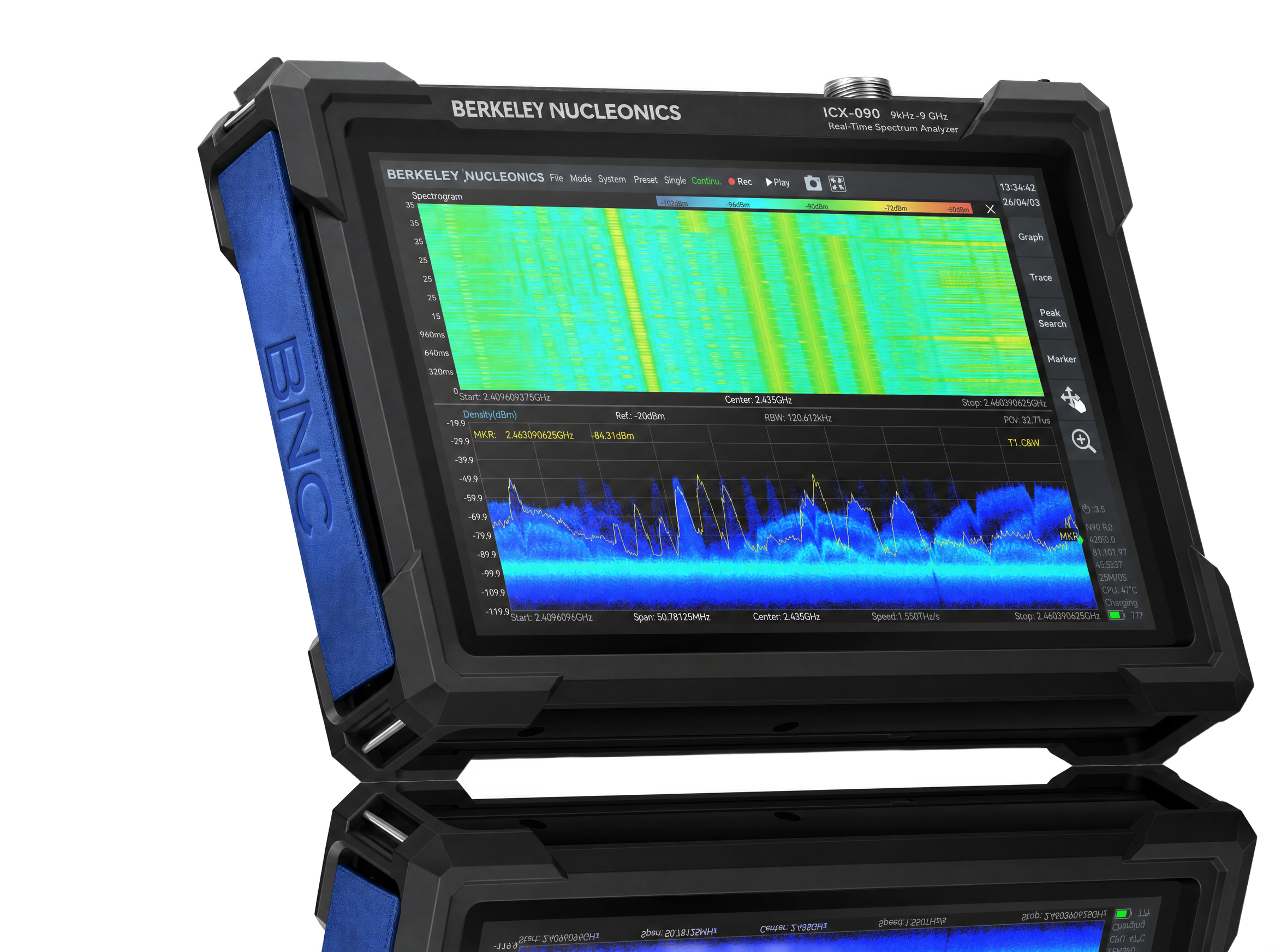
The ICX-FieldHawk platform brings frequency reach and field portability into one instrument. Coverage extends up to 40 GHz, which is what puts mmWave 5G in range alongside the legacy and mid-band cellular spectrum. One analyzer covers the whole survey instead of forcing a team to carry a separate box for the high band.
SpecICX-gen3 firmware drives the measurements that coverage work depends on. Channel power gives a calibrated read of how strong each carrier arrives at the test point. ACPR, the adjacent channel power ratio, shows how cleanly a transmitter stays inside its assigned channel and how much energy spills into its neighbors. Together these answer the two core questions of any coverage survey: is the signal strong enough here, and is it clean enough to coexist with the channels around it.
The workflow is built for movement. In a walk test, an operator carries the analyzer through a building, a venue, or a campus and records measurements along the route. In a drive test, the same instrument rides in a vehicle and logs the same metrics across miles of road. Either way the data stamps to position, so the result is not a single number but a picture of how coverage rises and falls across the area you actually serve.
Which models and accessories fit
For walk tests and indoor surveys, the ICX-FieldHawk Handheld is the practical choice. It is a self-contained instrument with its own display, so an engineer can sweep a floor, a stadium concourse, or an office tower without dragging a laptop along. The result is faster routes and fewer things to break.
For drive tests and vehicle-mounted survey rigs, the ICX-FieldHawk-U USB analyzer integrates cleanly into a logging setup. It draws little power, connects over USB, and streams measurements to the survey software running on the test computer, which makes it a good fit for permanent or semi-permanent vehicle installations.
For survey teams that work outdoors in heat, dust, and rain, the ICX-FieldHawk-R Rugged variant carries the same measurement capability in a hardened body. When direction toward a specific cell or interferer matters, the ANT-100G directional antenna adds a steerable, high-frequency front end with a switchable pre-amplifier, useful for isolating one carrier from a crowded skyline.
Use cases in the field
Network operators use coverage surveys to validate new builds against the original RF plan, signing off only when measured signal levels match the design. Deployment teams use the same data to plan where capacity is thin and a new small cell or site would earn its keep. Venue and enterprise integrators run indoor walk tests to confirm that distributed antenna systems and in-building 5G reach every corner that needs service, then hand the customer a measured record rather than a verbal assurance.
Recommended configuration
For a team that splits its time between indoor walk tests and vehicle drive tests, pair an ICX-FieldHawk Handheld for on-foot surveys with an ICX-FieldHawk-U USB analyzer for the drive-test rig, both running SpecICX-gen3 and both configured for the full reach up to 40 GHz so mmWave stays in view. Teams working primarily outdoors in tough conditions should specify the ICX-FieldHawk-R Rugged body, and any group doing carrier isolation or interference work should add the ANT-100G directional antenna.
To match a configuration to your bands, survey style, and fleet, contact Berkeley Nucleonics at info@berkeleynucleonics.com or 800-234-7858.
For a quick question, chat with an engineer at berkeleynucleonics.com.